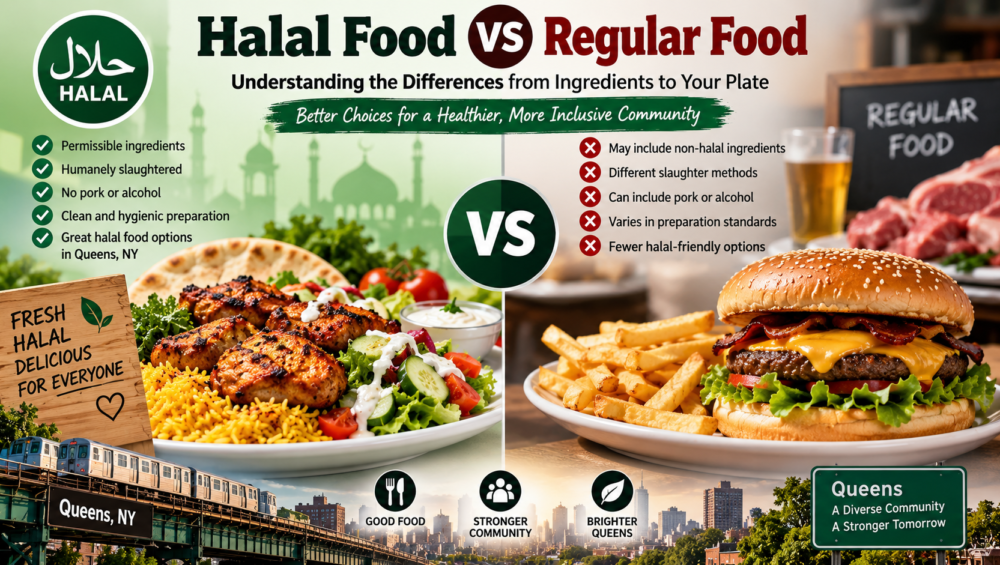
Halal food vs regular food is often discussed as if the two categories describe completely different cuisines. They do not.
Halal is a religious dietary classification. “Regular food” is not an official food-safety, religious, or culinary standard. In everyday conversation, people usually use the term to mean food that has not specifically been prepared, sourced, or represented according to halal requirements.
The difference can involve ingredients, meat sourcing, slaughter requirements, alcohol, pork, animal-derived ingredients, and food handling. However, the finished meals may look and taste very similar.
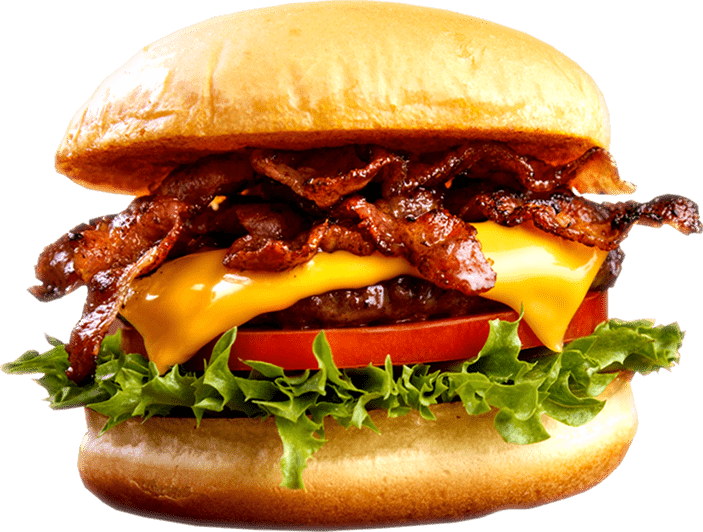
A halal cheeseburger can look like another cheeseburger. Halal grilled chicken can use the same vegetables, bread, rice, spices, and cooking techniques as another grilled chicken meal.
The distinction comes from whether the ingredients and applicable processes meet Islamic dietary rules.
USDA guidance says halal diets typically exclude pork, alcohol, alcohol-containing products, and certain non-halal animal-derived ingredients. For meat and poultry sold with halal labeling at federally inspected plants, USDA states that the products must be handled according to Islamic law and under Islamic authority.
For Queens diners, knowing these differences helps you order confidently without assuming halal food has to be unfamiliar.
What Is Halal Food vs Regular Food and Why Does It Matter in Queens?
The most important fact about halal food vs regular food is that “regular” does not automatically mean bad, unsafe, or unhealthy. It simply does not communicate the specific religious standard that the word halal communicates.
Similarly, halal does not automatically mean organic, low-calorie, preservative-free, gluten-free, or healthier. Those are separate classifications.
A comparison of halal vs non halal food should therefore focus on religious permissibility rather than making unsupported health claims.
In Queens, this distinction matters because the borough has a highly diverse restaurant culture. Diners can encounter similar dishes prepared by restaurants following different dietary standards.
One restaurant may use halal chicken. Another may use chicken without a halal designation. Both can cook that chicken over rice, grill it, add vegetables, and serve it with sauce.
New York adds another layer of consumer transparency. Businesses representing food as halal are subject to state registration and disclosure requirements, and establishments preparing halal food on-site must display certification information. Registration itself is not equivalent to halal certification.
Zaki’s Halal Food openly positions itself as a halal restaurant in South Richmond Hill, Queens. Its restaurant homepage lists chicken, lamb, falafel, kebabs, burgers, and other dishes as part of its halal menu.
Halal Food vs Regular Food: Key Differences at a Glance
Halal food vs regular food becomes clearer when you compare specific areas rather than making a general judgment about one being “better.”
Meat is one important area, but ingredients such as pork derivatives, alcohol, and animal-based additives can also matter.
| Comparison Area | Halal Food | Food Not Verified as Halal |
| Pork | Prohibited | May be used |
| Alcohol | Prohibited for halal diets | May be included |
| Meat sourcing | Must meet applicable halal requirements | No halal requirement |
| Slaughter requirements | Governed by Islamic requirements | Depends on producer |
| Animal-derived additives | Need suitable sources | No halal-specific restriction |
| Cuisine | Can be any cuisine | Can be any cuisine |
| Nutrition | Depends on the dish | Depends on the dish |
| Food safety | Must follow normal food-safety rules | Must follow normal food-safety rules |
The phrase halal meat vs regular meat can create confusion because “regular meat” is not a formal category. A more precise comparison is halal-certified or halal-represented meat versus meat that is not represented as halal.
USDA says federally inspected meat and poultry using halal labeling must be handled according to Islamic law and under Islamic authority.
The nutritional value, meanwhile, depends on the cut of meat, serving size, cooking method, sauce, salt, fat, and the rest of the meal.
That distinction helps diners make informed decisions instead of assuming that religious classification automatically determines nutritional quality.
Tips for Comparing Halal Food vs Regular Food Before Ordering
When comparing halal food vs regular food, focus on the information that actually changes your dining decision. A few focused questions are more useful than broad assumptions about quality or taste.
If halal compliance matters to you, verify the details relevant to your level of observance.
- Look for a clear halal statement from the restaurant.
- Ask whether all meat or only specific products are halal.
- Check the certifier when certification matters to you.
- Ask about sauces, marinades, gelatin, and animal-derived ingredients.
- Do not treat halal as a synonym for healthy or organic.
- Ask allergy questions separately.
- Compare the actual dish, ingredients, portion, and price.
The difference between halal and haram food is fundamentally about what is permitted and prohibited under Islamic rules, not about whether one dish looks more Middle Eastern than another.
That is why a halal burger can meet the standard while a seemingly traditional dish may not, depending on its ingredients.
Zaki’s gives diners access to menu details through its full halal restaurant menu, where rice platters, gyros, pita platters, kebabs, burgers, and sides are listed with current prices.
Infographic Image
Title: “Halal Food vs Regular Food: 7 Key Differences”
Suggested panels: Ingredients, pork, alcohol, meat sourcing, preparation, cuisine, nutrition.
Alt text: “Halal food vs regular food comparison guide for diners in Queens NY”
Does Halal Food vs Regular Food Taste Different?
One of the biggest misconceptions about halal food vs regular food is that halal status creates one particular taste.
It does not.
Halal requirements determine whether ingredients and applicable preparation are permissible. Flavor comes from the recipe.
A cook can season halal chicken with cumin, garlic, pepper, herbs, chili, lemon, or dozens of other ingredients. Another cook can prepare a milder version. The religious classification does not create a mandatory flavor profile.
This explains why halal restaurants can offer different culinary traditions. You might find biryani beside New York-style chicken over rice, burgers beside falafel, or kebabs beside chicken sandwiches.
At Zaki’s, the current menu includes Chicken Tikka Masala with Rice, Chicken Over Rice, Lamb Over Rice, Chicken Gyro, Chicken Kabab, falafel dishes, burgers, and other options.
The cooking method also matters. Grilling produces a different flavor from frying. Sauces can change heat and richness. Rice seasoning can make one platter taste completely different from another.
For a first-time diner, this means you should choose according to your taste rather than assuming halal food will taste a particular way.
You can browse Zaki’s halal food online to compare different meal types before visiting.
Halal Food vs Regular Food: Ingredients and Preparation Table
Halal food vs regular food comparisons become especially useful when diners look at individual ingredients. Many basic ingredients are identical in both kinds of meals.
The difference appears when an ingredient comes from a prohibited source or when meat needs halal verification.
| Ingredient or Process | Halal Consideration | Practical Example |
| Rice | Generally permitted | Check broth or added fat |
| Vegetables | Generally permitted | Check sauces |
| Chicken | Requires suitable halal source | Chicken platter |
| Beef | Requires suitable halal source | Burger or kofta |
| Pork | Prohibited | Bacon, ham, lard |
| Alcohol | Prohibited | Wine-based sauce |
| Gelatin | Source matters | Desserts or processed food |
| Cheese enzymes | Source may matter | Processed cheese products |
The USDA specifically identifies pork, alcohol, and some animal-derived ingredients as concerns for people following halal diets.
The practical halal food requirements can therefore reach beyond the main protein. Seasonings, flavorings, sauces, and processed components may also need consideration.
This is also why diners should avoid assuming vegetarian automatically means halal. Vegetarian removes meat, but it does not necessarily remove alcohol or every animal-derived processing aid.
The better approach is to consider the entire dish.
Why Choose Zaki’s for Halal Food vs Regular Food in Queens?
Zaki’s gives Queens diners a straightforward example of how halal standards can be applied to familiar restaurant food.
The restaurant describes itself as family-owned and focused on fresh, high-quality halal meals. Its stated goal is to serve halal food with friendly service in a clean and welcoming environment.
Diners do not have to choose an unfamiliar dish simply because they want halal food. Zaki’s offers rice plates, gyros, kebabs, burgers, chicken sandwiches, falafel, and other recognizable meals.
This is useful for groups where some diners know halal food well and others are trying it for the first time.
The menu also lets customers compare options and prices before ordering. For anyone researching the restaurant itself, the About Zaki’s Halal Food page explains its South Richmond Hill positioning and menu focus.
Halal Food vs Regular Food for Everyday Diners
Image Recommendation: Split-screen photograph showing two similar chicken-and-rice meals with labels focused on sourcing and ingredients rather than appearance.
Alt text: “Halal food vs regular food explained through ingredient and sourcing differences”
The key lesson in halal food vs regular food is that appearance rarely gives you the full answer.
A meal can look exactly like another meal while using different meat sources or ingredients.
This is important for Muslims who follow halal requirements, but the information can also help non-Muslim diners understand what a halal restaurant is communicating.
A halal designation does not mean the food is only for Muslim customers. It tells you something about how the food is sourced and prepared according to a religious dietary framework.
It also does not tell you whether the meal is low-fat, low-sodium, gluten-free, dairy-free, or allergen-free. Those questions still need their own information.
For first-time diners in Queens, the easiest strategy is to choose a meal you already understand and then learn about its halal preparation.
A burger, gyro, grilled chicken platter, or falafel dish can provide an easy introduction.
For additional food guides and local dining information, visit the Zaki’s blog.
Frequently Asked Questions About Halal Food vs Regular Food
Halal food vs regular food questions often focus on price, preparation, taste, certification, and whether halal changes the basic dining experience. The short answers below address those practical concerns.
1. What is the biggest difference between halal food vs regular food?
The main difference is compliance with Islamic dietary requirements. Halal food excludes prohibited ingredients and, when meat is involved, requires meat to meet relevant halal standards.
2. Does halal meat taste different?
Not necessarily. Flavor depends heavily on the cut, freshness, seasoning, cooking method, sauce, and recipe.
Two dishes prepared differently can taste very different even when both use halal meat.
3. Is halal food automatically healthier?
No. Halal is a religious dietary classification, not a nutrition score.
Calories, fat, sodium, protein, fiber, and other nutritional factors depend on the actual ingredients and preparation.
4. Does halal food cost more?
There is no universal halal price premium for restaurant meals. Price depends on ingredients, portions, supplier costs, and restaurant pricing.
Zaki’s current online menu lists multiple affordable meal categories, but prices should always be checked before ordering because they can change.
5. How long does halal food take to prepare?
Halal status does not determine restaurant cooking time. A gyro may be prepared faster than a grilled dish, while a large order may take longer than a single meal.
6. How is halal meat identified?
Diners can look for restaurant statements, certification information, supplier information, or product labels. For federally inspected meat and poultry, USDA explains the requirements attached to halal or Zabiah Halal labeling. See the USDA meat and poultry labeling guide.
7. Where can I compare halal meal options in Queens?
Zaki’s Halal Food serves South Richmond Hill and lists its current options online. If you have questions about ingredients, pickup, or menu choices, contact Zaki’s Halal Food.
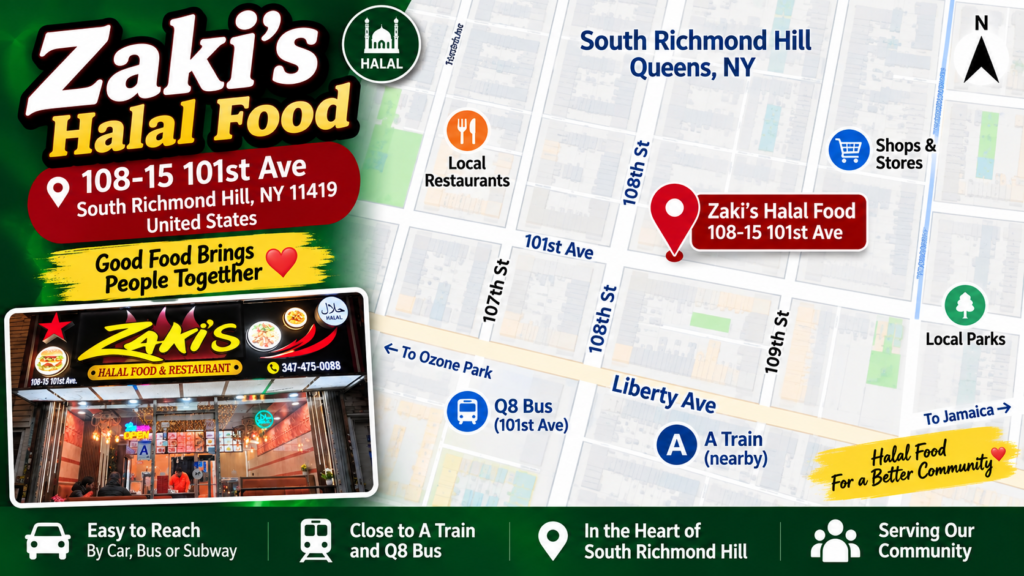
How to Get to Zaki’s Halal Food?
Zaki’s Halal Food is conveniently located on 101st Avenue near 108th Street in South Richmond Hill, Queens, making it easy to reach from nearby Richmond Hill, Ozone Park, Jamaica, and other parts of Queens. Visitors traveling by bus can take the Q8, which runs along 101st Avenue and stops at 101st Ave and 108th Street, just steps from the restaurant. For subway riders, the A train provides convenient access to the surrounding area, with stations along nearby Liberty Avenue. The restaurant is also close to the busy Liberty Avenue corridor, a well-known commercial area serving the diverse South Richmond Hill and Richmond Hill communities. With access to 101st Avenue, Liberty Avenue, local bus service, and the A subway line, Zaki’s Halal Food is conveniently positioned for customers looking for halal food in South Richmond Hill and nearby Queens neighborhoods.
Contact Information
Phone: +1 718-285-5191
Address:
Zaki’s Halal Food
108-15 101st Ave
South Richmond Hill, NY 11419
United States
Email:
info@zakishalalfoodusa.com
orders@zakishalalfoodusa.com