10 Common Halal Food Myths Explained for Queens Diners
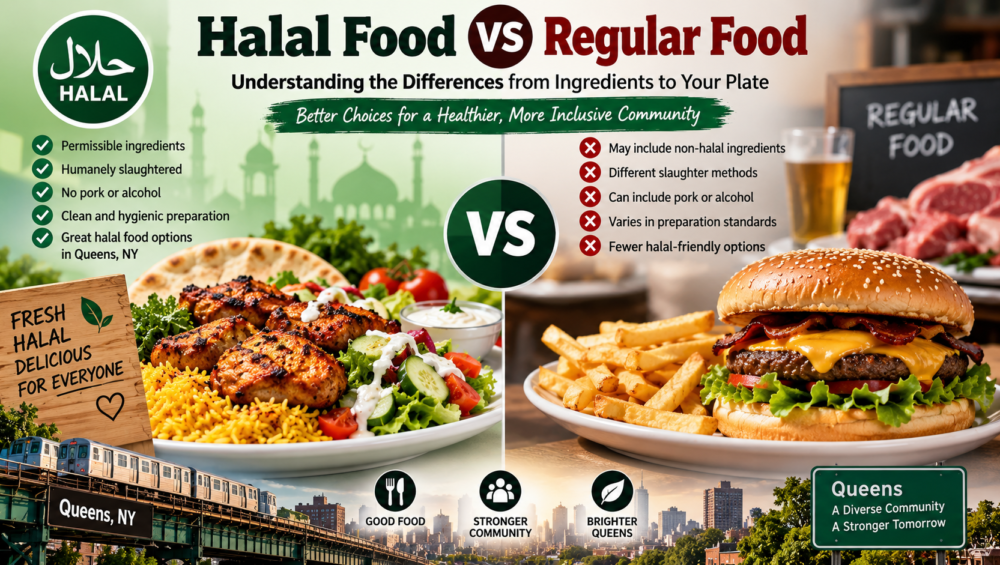
Halal food myths can make halal dining seem more complicated than it actually is. Some people think halal simply means “Muslim food.” Others believe halal food has to taste different, that only meat can be halal, or that every restaurant using the word halal follows exactly the same certification process.
These assumptions can create confusion.
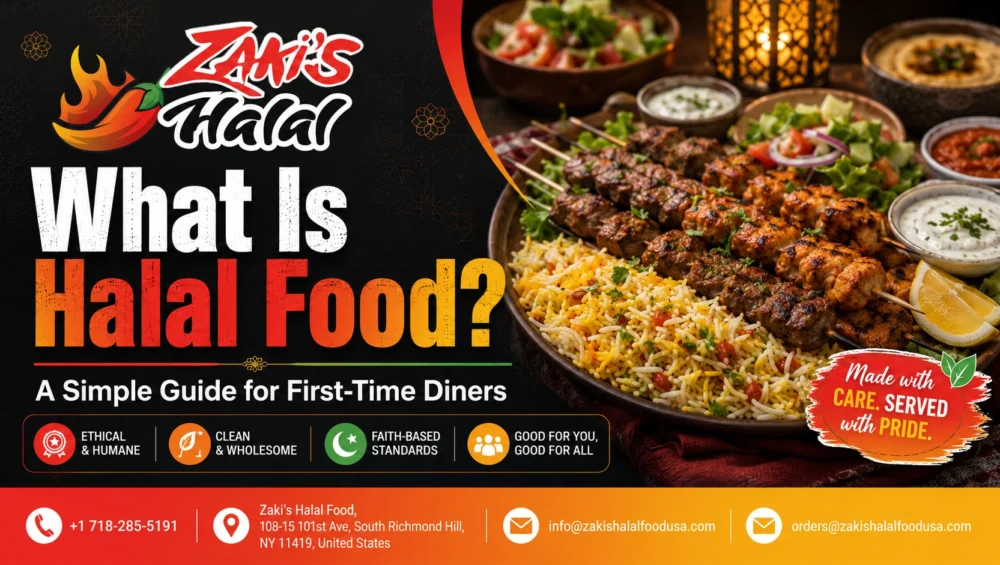
Halal is an Arabic term generally meaning permissible or lawful, and in food discussions it refers to foods and preparation practices that comply with Islamic dietary requirements. IFANCA explains that halal applies broadly to food and other aspects of life, while meat has specific requirements.
For people in Queens, understanding the facts is particularly useful because halal cuisine is part of a diverse restaurant environment. Customers can enjoy halal chicken, lamb, falafel, rice platters, gyros, seafood, and many other foods.
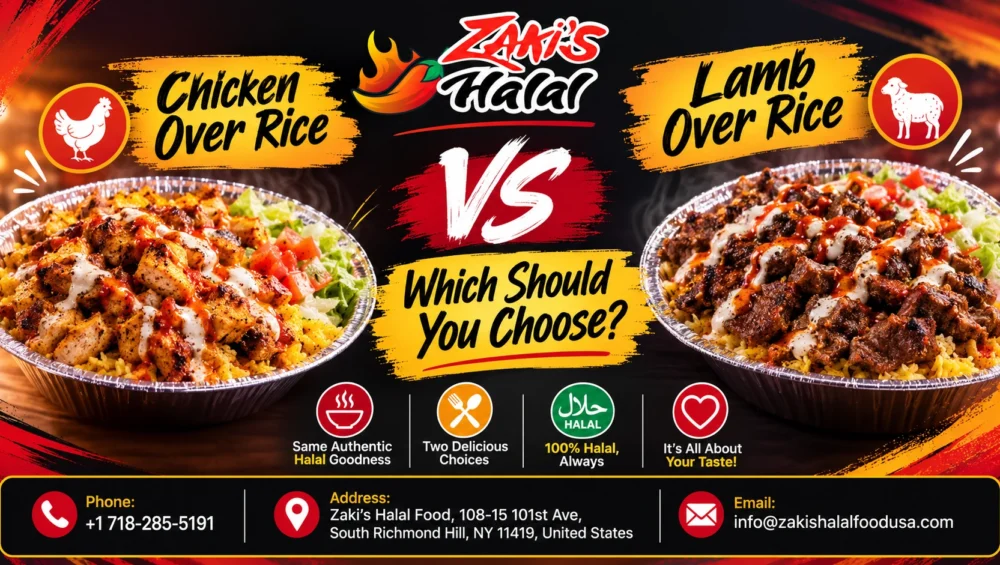
Zaki’s Halal Food offers a practical example. Its menu includes halal chicken and lamb rice platters, gyros, pita platters, falafel, kebabs, seafood, and other choices.
This guide addresses ten common misunderstandings in plain language. The goal is education, not argument. Where different Islamic interpretations exist, the safest approach is to recognize that halal standards can vary and encourage customers to ask the restaurant or certifying organization for specific information.
What Are Halal Misconceptions & Why Do They Matter in NYC?
Halal misconceptions matter because they can prevent people from understanding a large part of Queens’ food culture.
The first misconception is that halal is simply a cuisine. It is not. A restaurant may serve Middle Eastern food, South Asian food, American food, or another cuisine while still following halal requirements.
The second misconception is that halal automatically means healthier. Halal and nutrition are not identical. A halal burger can still be high in calories, and a halal salad can be a lighter option. Halal describes permissibility, not a universal nutrition profile.
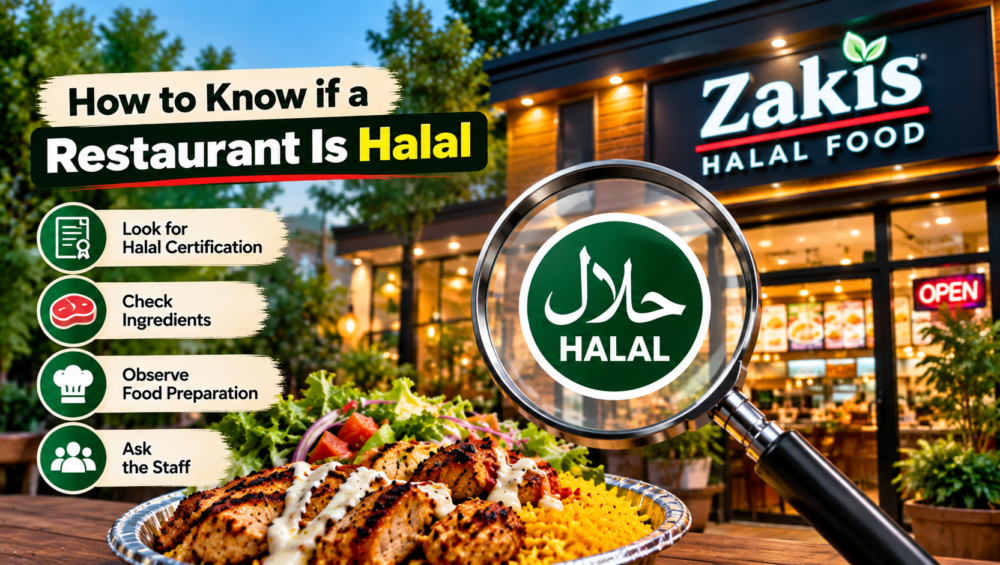
The third misconception is that every halal claim means exactly the same thing. Certification programs differ, and customers who want specific assurance should ask about the certifying organization and scope.
New York also has a formal halal-food registration framework. Businesses making or selling halal food must register, and on-site businesses must display certification information. However, the state specifically notes that registration does not itself mean the food is certified.
Separately, NYC food establishments must meet public-health requirements. Restaurants are inspected at least annually and must follow food-safety practices.
Understanding these distinctions makes halal dining easier to navigate.
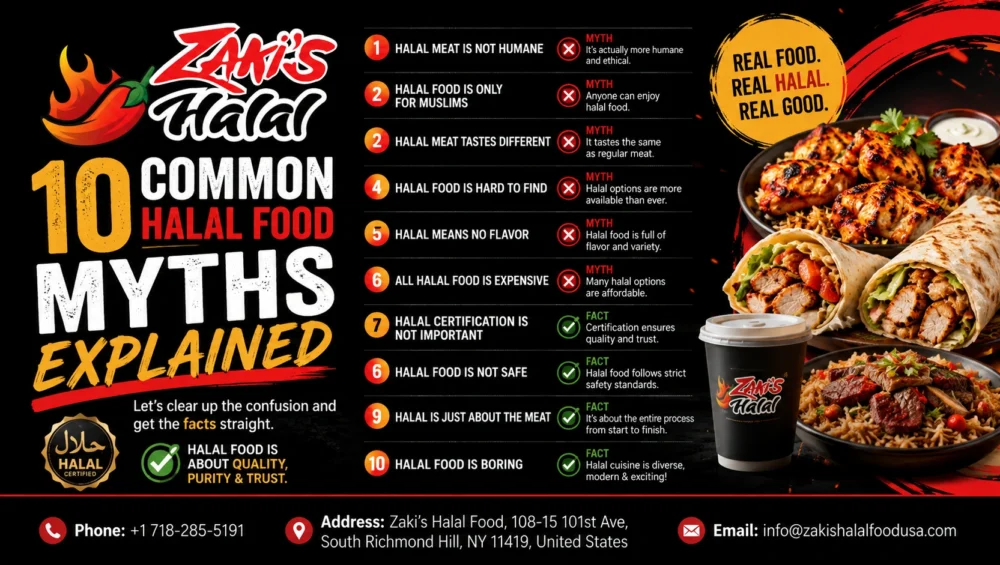
10 Halal Food Facts vs. Common Myths
Halal food facts are easier to remember when presented side by side.
| # | Common Myth | Better Understanding |
| 1 | Halal means only Muslims can eat it | Anyone can enjoy halal food |
| 2 | Halal is a type of cuisine | Halal describes permissibility |
| 3 | Halal food has no flavor | Halal cuisine can be highly flavorful |
| 4 | Only meat can be halal | Many plant-based foods can be halal |
| 5 | Halal always means healthy | Halal and nutrition are different concepts |
| 6 | Every halal restaurant is certified identically | Certification and standards can vary |
| 7 | Halal only applies to slaughter | Ingredients and processes can matter too |
| 8 | Halal food is hard to find | Queens has many halal choices |
| 9 | Non-Muslims cannot eat halal | Halal food is open to everyone |
| 10 | Halal restaurants cannot offer variety | Halal menus can be extensive |
Zaki’s current menu demonstrates that variety. It lists rice platters, pita platters, gyros, kabab and grill, falafel, seafood, burgers and sandwiches, sides, and drinks.
7 Tips for Separating Halal Food Facts from Myths
Halal dietary rules can seem confusing when information comes from social media, friends, or random websites. Use these practical tips.
- Check the restaurant’s own halal information.
- Ask who certifies the food when certification matters to you.
- Ask about ingredients in sauces and processed foods.
- Remember that halal and healthy are not synonyms.
- Do not assume halal food is limited to one cuisine.
- Ask questions rather than relying on assumptions.
- Compare information with reputable educational sources.
For additional education, readers can explorezaki’s halal consumer resources.
Zaki’s own Halal Food Guide also provides educational material about halal dishes and Middle Eastern cuisine.
What People Often Get Wrong About Halal Food
Halal meat misconceptions are some of the most common misunderstandings.
Myth 1: Only Muslims Can Eat Halal Food
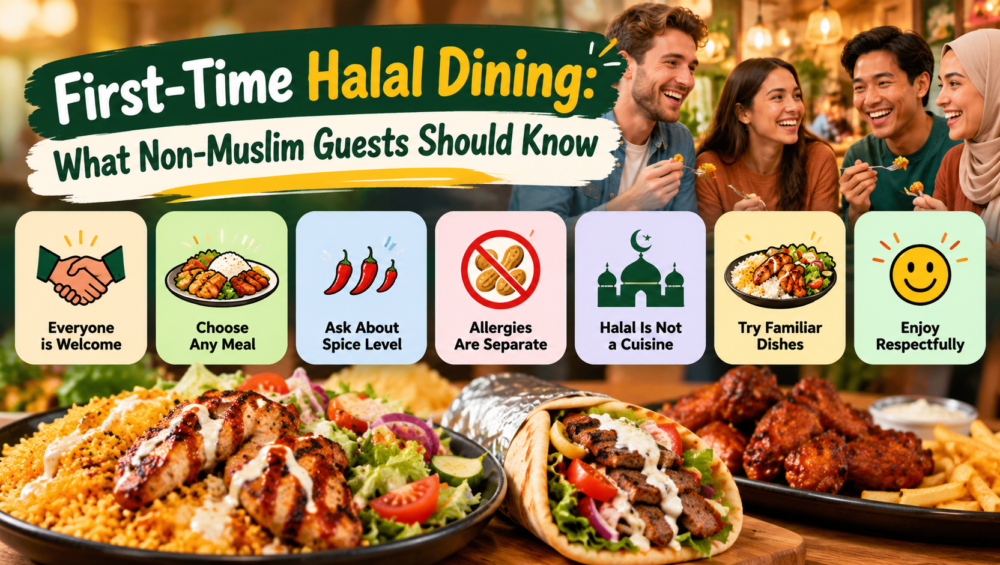
False. Anyone can eat halal food. Halal describes how food is permitted under Islamic dietary principles. A non-Muslim customer can order Chicken Over Rice, a gyro, kebab, falafel, or another halal dish.
Myth 2: Halal Is a Cuisine
Not exactly. Halal is a dietary concept. Halal food can be Middle Eastern, South Asian, American, Mediterranean, or another cuisine.
Myth 3: Halal Food Has No Flavor
This is one of the easiest myths to disprove. Zaki’s menu includes grilled kebabs, seasoned chicken, lamb, gyros, sauces, falafel, and rice dishes.
Myth 4: Only Meat Can Be Halal
No. Plant-based foods can also be halal as long as they meet applicable requirements. Falafel is an obvious restaurant example.
Myth 5: Halal Automatically Means Healthy
Halal does not automatically describe calorie content, fat content, sodium, or portion size. Nutrition depends on ingredients, cooking method, and portion.
Certification, Safety, Variety and More
Halal certification is often misunderstood.
| Myth | Fact |
| Certification is just a logo | Certification can involve review and auditing |
| Halal only concerns meat | Ingredients and processes may matter |
| Halal means food safety is guaranteed | Public-health food safety remains separate |
| Halal food lacks variety | Modern halal menus can be extensive |
| Halal restaurants are only for Muslims | Anyone can dine there |
IFANCA describes halal certification as a structured process that can involve facility audits, ingredient review, sanitation review, process review, and documentation.
NYC’s food-safety framework is separate. Restaurants must follow food-safety requirements and undergo inspections.
This is why consumers should avoid making broad assumptions.
Why Choose Zaki’s Halal Food in South Richmond Hill?
Zaki’s Halal Food is designed around halal Middle Eastern dining in South Richmond Hill. The menu includes a range of dishes rather than focusing on one narrow category.
6 Things Customers Can Explore
- Chicken Over Rice.
- Lamb Over Rice.
- Mixed Over Rice.
- Gyro wraps.
- Falafel.
- Kabab and grill dishes.
The restaurant also offers pita platters and seafood, creating options for different preferences.
This variety matters because one of the biggest myths about halal food is that it is restrictive. In practice, a well-designed halal menu can be just as varied and exciting as any other restaurant menu.
Why Halal Food Can Be Both Traditional and Modern
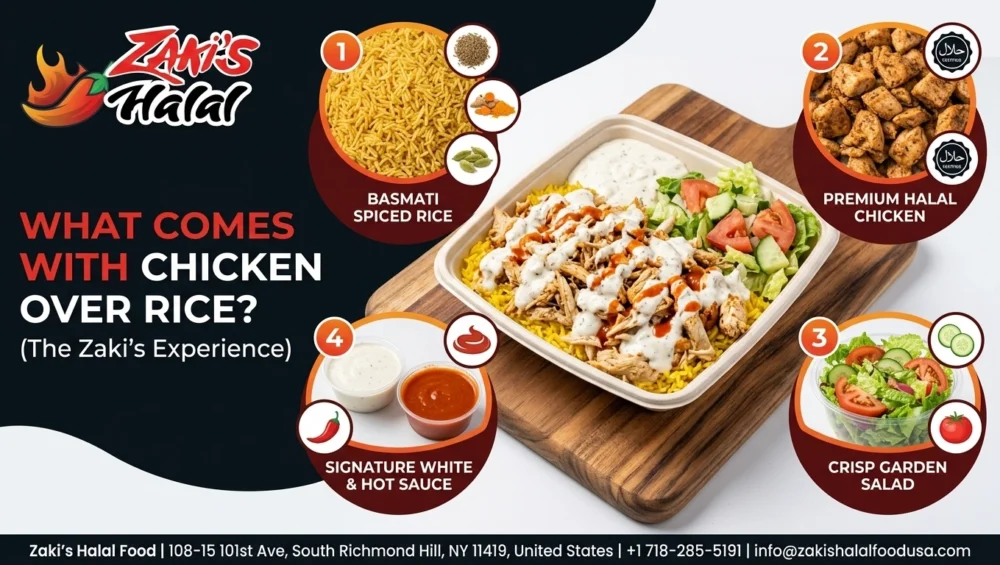
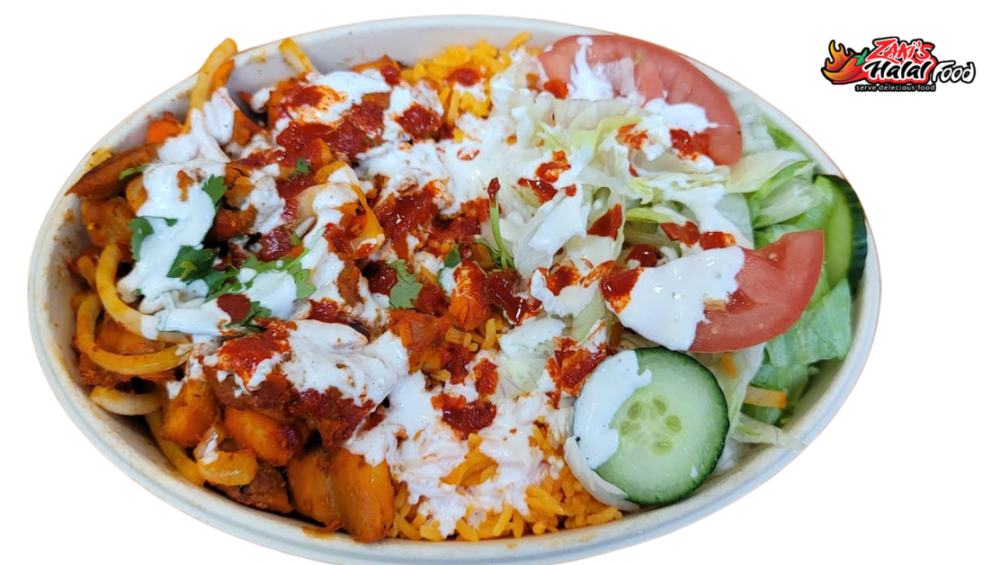
Halal food myths often come from treating halal cuisine as something old-fashioned or limited. Modern halal restaurants can combine traditional ingredients with contemporary restaurant formats. Chicken Over Rice is a perfect example. It takes familiar grilled chicken, seasoned rice, fresh vegetables, and sauces and turns them into a convenient New York meal.
Zaki’s menu reflects this blend. It includes traditional Middle Eastern-inspired dishes alongside familiar American-style options such as burgers, sandwiches, chicken tenders, and drinks.
That makes halal food accessible to families, students, workers, visitors, and first-time diners.
The South Richmond Hill location also places Zaki’s within Queens’ highly diverse food environment. Customers can explore different flavors without needing to travel far.
The important lesson is that halal does not mean “less choice.” It means the food is prepared and selected within a particular set of dietary principles.
Frequently Asked Questions About Halal Food Myths
Halal food myths often come from simple misunderstandings, so direct answers help.
1. Is halal food more expensive?
Not necessarily. Price depends on ingredients, portion size, restaurant model, and location.
2. Does halal certification take time?
Yes. Certification may involve application, ingredient review, facility audits, process review, and documentation.
3. Is halal food safe?
Halal status and food safety are separate concepts. NYC restaurants must follow food-safety rules regardless of halal status.
4. Can non-Muslims eat halal food?
Yes. Halal food is available to everyone.
5. Does halal meat taste different?
Halal status itself does not determine a specific taste. Flavor depends on meat, seasoning, cooking method, sauces, and recipe.
6. Is falafel halal?
Falafel can be halal when its ingredients and preparation meet applicable requirements.
7. Where can I learn more?
You can explore reputable halal education resources and restaurant-specific information before ordering.
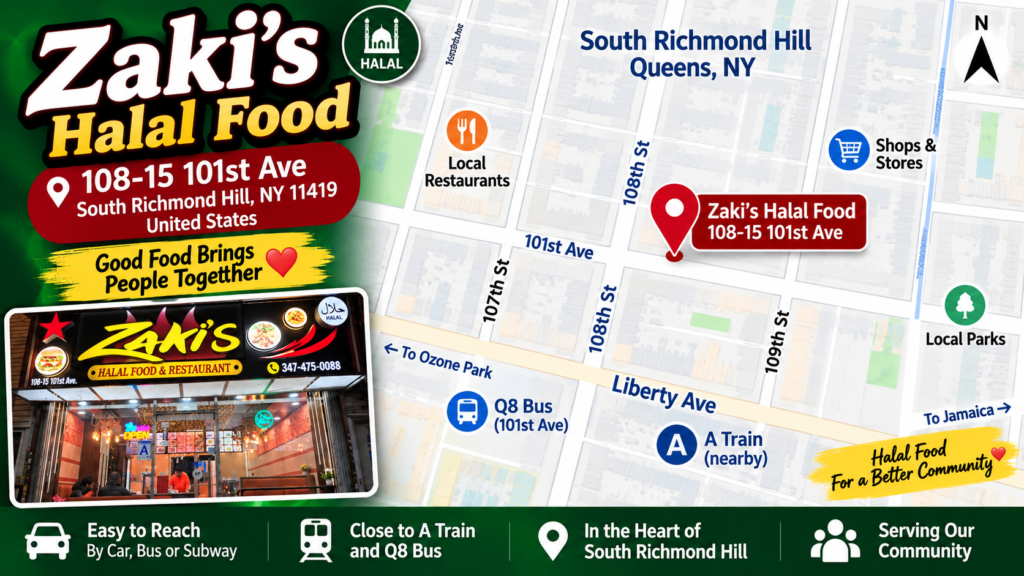
How to Get to Zaki’s Halal Food from Different Locations
From John F. Kennedy International Airport (JFK)
If you are coming from JFK Airport, take the Van Wyck Expressway (I-678) northbound toward Queens. For current access, Exit 4 toward Liberty Avenue is the practical approach; NYSDOT previously closed the northbound Atlantic Avenue exit and directs motorists to use Exit 4 instead.
Continue west on Liberty Avenue, then head north toward 101st Avenue/108th Street. Continue to 108-15 101st Ave, where Zaki’s Halal Food is located.
Suggested route:
JFK Airport → Van Wyck Expressway (I-678) → Liberty Avenue → 108th Street → 101st Avenue → Zaki’s Halal Food.
From Jamaica, Queens
From Jamaica, head west toward the South Richmond Hill area using Jamaica Avenue and connecting local streets toward 108th Street and 101st Avenue.
Another practical option is to approach the area from the Van Wyck Expressway, then connect to Liberty Avenue and local streets leading north to 101st Avenue.
Suggested route:
Jamaica → Jamaica Avenue → 108th Street → 101st Avenue → Zaki’s Halal Food.
From Ozone Park
Zaki’s is particularly easy to reach from Ozone Park because 101st Avenue, Liberty Avenue, Rockaway Boulevard, and other major neighborhood corridors connect the two areas. Queens planning documents identify 101st Avenue, Liberty Avenue, Jamaica Avenue, Atlantic Avenue, and Rockaway Boulevard as important commercial corridors in this part of Queens.
From Ozone Park, take 101st Avenue east toward South Richmond Hill and continue to the restaurant at 108-15 101st Ave.
Suggested route:
Ozone Park → 101st Avenue → 108th Street → Zaki’s Halal Food.
From Brooklyn
Visitors driving from Brooklyn can generally use the Belt Parkway eastbound and connect toward Queens through Cross Bay Boulevard or other connecting roads. From the Queens side, continue toward Liberty Avenue, then head toward 108th Street and north to 101st Avenue.
Suggested route:
Brooklyn → Belt Parkway → Cross Bay Boulevard → Liberty Avenue → 108th Street → 101st Avenue → Zaki’s Halal Food.
For live traffic conditions, the exact local-road sequence can change, so GPS navigation is recommended.
From Manhattan
From Manhattan, a common driving approach is across the Queensboro Bridge, followed by eastbound travel through Queens toward the Van Wyck Expressway. From the Van Wyck area, connect to Liberty Avenue and continue west toward 108th Street, then head north to 101st Avenue.
Suggested route:
Manhattan → Queensboro Bridge → Queens → Van Wyck Expressway → Liberty Avenue → 108th Street → 101st Avenue → Zaki’s Halal Food.
From LaGuardia Airport (LGA)
From LaGuardia Airport, travel toward central/southern Queens and connect to the Grand Central Parkway/Queens road network, then continue toward the Van Wyck Expressway (I-678). From there, use Liberty Avenue and local streets to reach 101st Avenue.
Suggested route:
LaGuardia Airport → Grand Central Parkway → Van Wyck Expressway → Liberty Avenue → 108th Street → 101st Avenue → Zaki’s Halal Food.
By Subway
Public transportation is also convenient.
The closest subway access is the A train near 111th Street and Liberty Avenue. Property and transit data place this station area roughly 0.27 miles from Zaki’s Halal Food.
After getting off near 111th Street & Liberty Avenue, walk north toward 101st Avenue and then continue to 108-15 101st Ave.
By Bus
Several local bus options serve the surrounding area. The Q37 serves 111th Street/101st Avenue, which is particularly useful for reaching the restaurant’s block.
The Q112 also operates along Liberty Avenue, with stops around 111th Street, providing another option for visitors coming from nearby Queens neighborhoods.
Section 10: Contact Zaki’s Halal Food
Phone: +1 718-285-5191
Address: Zaki’s Halal Food, 108-15 101st Ave, South Richmond Hill, NY 11419, United States
Email: info@zakishalalfoodusa.com
Email: orders@zakishalalfoodusa.com