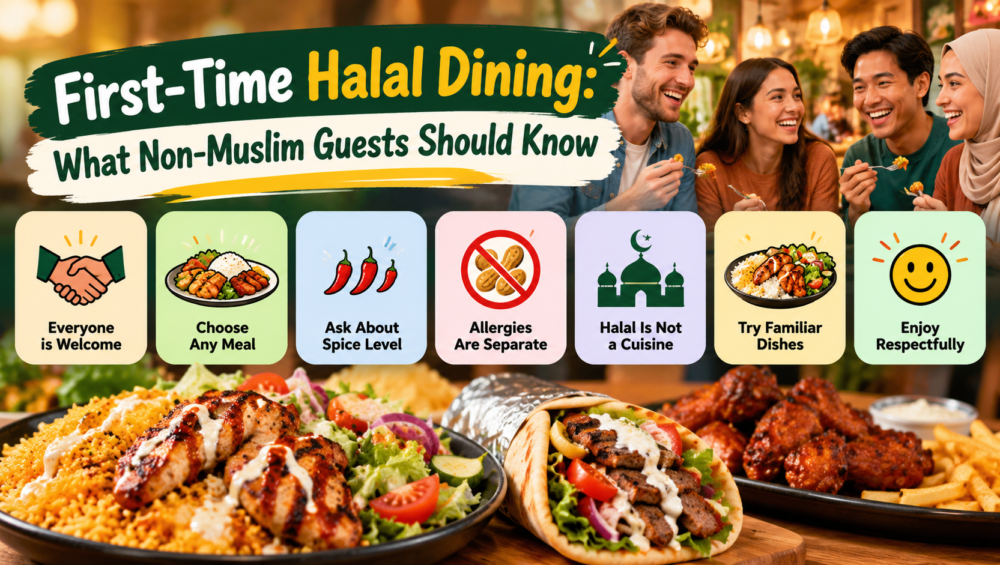
Guide for non-Muslims trying halal food at a restaurant in Queens

Can Non Muslims Eat Halal Food? A Simple Guide for Everyone

Can non Muslims eat halal food. The answer is Yes. Halal food is not restricted to Muslim diners. The term halal describes whether food is permissible under Islamic dietary rules. It does not mean that only Muslims are allowed to eat it. A non-Muslim customer can order halal chicken, lamb, rice, falafel, kebabs, burgers, gyros, or another halal meal in the same way they would order food from any restaurant. You do not need special permission, religious knowledge, or a particular reason for choosing halal food.

Many first-time diners are simply curious about the cuisine. Others visit a halal restaurant because they are eating with Muslim friends, coworkers, classmates, family members, or neighbors. Some choose the restaurant because they like the menu.

USDA guidance describes halal diets in terms of permitted and excluded ingredients, including restrictions involving pork, alcohol, and certain animal-derived products. It does not define halal food as something reserved for one group of customers.

At Zaki’s Halal Food in Queens, the menu includes familiar foods such as chicken over rice, lamb gyros, falafel, kebabs, burgers, and sandwiches.

Can Non Muslims Eat Halal Food and Why Does It Matter in Queens?

Can non Muslims eat halal food is especially relevant in Queens because people from many cultural and religious backgrounds share the same neighborhoods, workplaces, schools, and restaurants.

Food often becomes an easy way to experience another community without needing to adopt its religious beliefs.

The phrase halal food for non Muslims simply refers to halal meals being enjoyed by diners who do not personally follow Islamic dietary law.

There is no separate version of the meal.

A chicken over rice platter does not change depending on the religion of the customer. A restaurant prepares the halal food according to its standards, and customers choose whether they want to eat it.

Understanding this point can make group dining easier.

If one person in a group requires halal food, choosing a halal restaurant can give that diner suitable options while allowing everyone else to enjoy the same meal.

It is still important to distinguish halal from other dietary needs. Someone who is vegetarian, vegan, gluten-free, dairy-free, or managing a food allergy should ask their own questions.

Halal status does not automatically answer those concerns.

For a closer look at the restaurant and its local background, read About Zaki’s Halal Food. The business describes itself as a family-owned restaurant serving South Richmond Hill and the wider Queens community.

Can Non Muslims Eat Halal Food? Common Questions at a Glance

Can non Muslims eat halal food without changing how they normally dine? Yes.

The table below addresses common concerns from people who have never visited a halal restaurant.

QuestionShort AnswerWhat to Know
Can a non-Muslim order halal food?YesHalal food can be eaten by anyone
Do I need to follow Islam?NoHalal describes the food
Can I order a burger?YesMany halal restaurants offer familiar dishes
Is every halal meal spicy?NoSpice depends on the recipe
Is halal the same as vegetarian?NoHalal meals can contain meat
Is halal automatically gluten-free?NoCheck ingredients separately
Do I need special etiquette?Normal respectful dining is enoughAsk staff if unsure

A common question about who can eat halal food comes from the mistaken idea that religiously compliant food must be consumed only by people of that religion.

Food standards do not work that way.

Kosher food, vegetarian food, vegan food, gluten-free food, and halal food may all be chosen by people who do not personally follow the belief or dietary system behind the label.

The practical question is simply whether the meal fits your own preferences and needs.

Tips for First-Time Diners Asking Can Non Muslims Eat Halal Food

Can non Muslims eat halal food comfortably at a halal restaurant? Absolutely. Treat the experience like any other restaurant visit.

You may want to ask about unfamiliar menu items, spice levels, sauces, or portion sizes, but you do not need to explain why you are there.

  • Choose a dish based on flavors you normally enjoy.
  • Ask staff to explain unfamiliar menu names.
  • Mention food allergies separately.
  • Ask about spice levels if you prefer mild food.
  • Try a rice platter or gyro if you want a familiar starting point.
  • Consider falafel if you want a meat-free option.
  • Be respectful of the restaurant’s dietary practices.

Some people ask is halal food only for Muslims because they are worried that ordering it may be disrespectful. It is not disrespectful to purchase and enjoy halal food at a restaurant serving the public.

In fact, being interested in the food and asking respectful questions can make the experience more enjoyable.

You can review the Zaki’s halal menu before visiting. Current categories include rice platters, gyros, pita platters, kebabs, burgers, sides, biryani, and seafood.

Why Can Non Muslims Eat Halal Food Is Also a Group-Dining Question

For many people, can non Muslims eat halal food becomes important when planning a meal for a mixed group.

Imagine a workplace lunch with eight people. Two require halal meat, one is vegetarian, and the rest have no religious dietary restrictions.

A halal restaurant can potentially make the group decision easier because the customers who require halal meat have suitable meat choices while the other diners can order according to taste.

The vegetarian diner still needs an appropriate vegetarian dish, of course.

Zaki’s offers meat-based dishes as well as falafel items. Its current menu lists Falafel Over Rice, Falafel Gyro, and Falafel Pita Platter alongside chicken, lamb, beef, and seafood dishes.

That variety can be helpful for families, office groups, students, or friends who have different preferences.

Halal dining can also introduce people to dishes they may not normally order.

Someone accustomed to burgers might try a gyro. Someone who likes grilled food could choose a kebab. A diner who prefers rice bowls can start with chicken or lamb over rice.

You can browse Zaki’s food for online ordering to see different meal types before making a group order.

Can Non Muslims Eat Halal Food? Menu Options for First Visits

Can non Muslims eat halal food if they are unfamiliar with Middle Eastern flavors? Yes, and you can start with food that already feels familiar.

If You Usually LikeTryWhy It May Feel Familiar
Rice bowlsChicken Over RiceProtein, rice, salad, sauce
WrapsChicken GyroMeat and toppings in pita
BurgersHalal Cheese BurgerFamiliar burger format
Grilled chickenChicken KababGrilled seasoned protein
Vegetarian mealsFalafel Over RicePlant-based main option
Mixed plattersMixed Over RiceChicken and lamb together
Fish and riceTilapia Fish with RiceFamiliar seafood combination

Zaki’s current menu lists these and related items with prices, though availability and pricing can change.

For people trying halal food for the first time, Chicken Over Rice can be a simple entry point because it uses recognizable ingredients and allows diners to experience the restaurant’s seasoning and sauces.

There is no requirement to start with the most traditional-looking dish.

Choose what you genuinely want to eat.

That is one reason halal restaurants can appeal to a broad customer base. Religious compliance and mainstream dining formats can exist in the same meal.

Why Choose Zaki’s When Asking Can Non Muslims Eat Halal Food in Queens?

Zaki’s positions itself as a welcoming neighborhood restaurant serving South Richmond Hill and Queens. Its stated goal is to provide halal food with friendly service in a clean and welcoming environment.

For non-Muslim first-time diners, the menu has the advantage of familiarity.

You can choose burgers and chicken sandwiches or move toward gyros, rice platters, falafel, biryani, and kebabs.

This allows diners to explore at their own pace.

There is also no need to understand every Islamic dietary rule before ordering. The restaurant is responsible for explaining how it represents its food, while the customer can focus on taste, allergies, preferences, and any questions that matter personally.

For more guides about halal dishes and local dining, visit the Zaki’s Halal Food blog.

Can Non Muslims Eat Halal Food and Enjoy the Same Meal as Muslim Friends?

Image Recommendation: A diverse group of adult friends sharing rice platters, gyros, falafel, and grilled dishes around one restaurant table.

Alt text: “Muslim and non-Muslim friends sharing halal food together in Queens NY”

Can non Muslims eat halal food at the same table as Muslims? Yes. Shared meals are one of the most straightforward situations where halal restaurants can be convenient.

If Muslim diners require halal food, selecting a restaurant that serves halal meals can remove one major concern.

The non-Muslim members of the group can still choose dishes based on flavor.

They do not need to order differently because of their religion.

The main practical issue is individual dietary needs. One person may avoid dairy. Another may be allergic to sesame. Someone may want a vegetarian meal.

Those needs should still be communicated separately.

Halal answers one category of dietary requirement. It does not replace every other food label.

For an authoritative overview of what halal diets generally exclude, see the USDA halal foods guidance.

Frequently Asked Questions: Can Non Muslims Eat Halal Food

Can non Muslims eat halal food is usually followed by questions about religion, taste, price, restaurant etiquette, and what to order first. Here are clear answers for first-time diners.

1. Can non Muslims eat halal food?

Yes. Anyone can eat halal food. The term describes food that complies with Islamic dietary requirements rather than restricting which customers may consume it.

2. Do non-Muslims need to follow any religious ritual before eating halal food?

No. A customer does not need to perform a religious ritual before ordering or eating a halal restaurant meal.

Normal respectful dining behavior is enough.

3. Is halal food more expensive for non-Muslims?

No restaurant should charge a different price because of a customer’s religion.

Menu prices apply to the dish. Zaki’s lists current prices publicly on its menu, and customers should check those prices before ordering because they can change.

4. Does halal food take longer to prepare?

Not because it is halal. Restaurant preparation time depends on the dish, kitchen workload, order size, and cooking method.

5. Can non-Muslims order halal meat?

Yes. Halal chicken, beef, and lamb can be purchased and eaten by non-Muslim customers.

6. Is it disrespectful for a non-Muslim to eat halal food?

No. Ordering food offered to the public by a halal restaurant is not inherently disrespectful.

Being polite to staff and other diners is the same basic expectation you would have in any restaurant.

7. Where can non-Muslims try halal food in Queens? 

Zaki’s Halal Food is at 108-15 101st Ave, South Richmond Hill, NY 11419. It offers rice platters, gyros, kebabs, falafel, burgers, and additional items.

For questions before visiting, contact Zaki’s Halal Food.

Looking to try halal food in Queens?

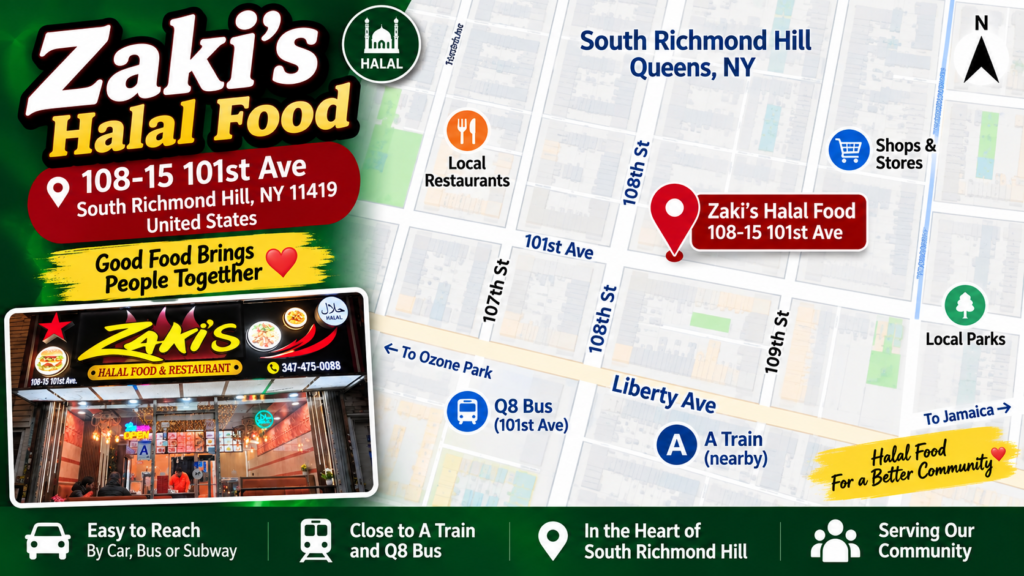
 Zaki’s Halal Food is located at 108-15 101st Ave in South Richmond Hill, Queens, NY 11419, near the intersection of 101st Avenue and 108th Street. The Q8 bus stops along 101st Avenue near 108th Street, making the restaurant easy to reach by public transportation. Nearby A train stations provide additional subway connections, while Liberty Avenue and the Little Guyana area are also close to this diverse Queens neighborhood. Whether you are Muslim or trying halal food for the first time, Zaki’s Halal Food welcomes everyone to enjoy fresh halal meals in South Richmond Hill.

Contact Information

Phone: +1 718-285-5191

Email:
info@zakishalalfoodusa.com

  • Nearest bus: 101 Av /108 St — the Q8 bus runs along 101st Avenue and stops at 108th Street, essentially at the restaurant’s intersection. MTA confirms the Q8 operates between Jamaica and Gateway Center via 101st Avenue. MTA
  • Nearby subway: 111 St and Ozone Park–Lefferts Blvd are nearby A train stations. For customer directions, I would mention 111 St (A train) first as a useful nearby subway connection.
  • Another transportation reference: The Q8 continues east toward Jamaica, including Sutphin Blvd/Archer Ave and Jamaica Bus Terminal, giving customers connections to additional subway, bus, LIRR, and AirTrain services. MTA
  • Local landmark/entity: Little Guyana Avenue on Liberty Avenue is a particularly useful cultural/geographic entity for South Richmond Hill. It is more locally relevant to your restaurant than using famous Manhattan attractions.
  • You can also naturally reference Liberty Avenue, Richmond Hill, South Richmond Hill, Ozone Park, 101st Avenue, 108th Street, and Queens where relevant.
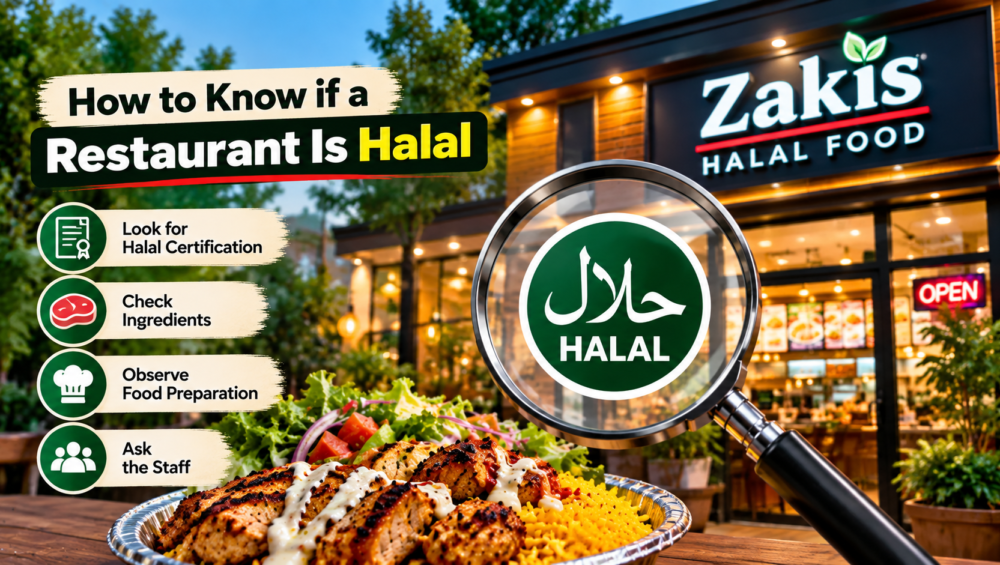
 

First-time diner checking halal restaurant information before ordering in Queens

How to Know if a Restaurant Is Halal: A Practical Queens Guide

How to know if a restaurant is halal is an important question because a restaurant name, menu style, or cultural appearance is not enough to verify its food.

A restaurant may serve Middle Eastern dishes without being fully halal. Another restaurant may serve burgers, fried chicken, or American-style food while following halal requirements.

The most reliable approach is to look for transparent halal information and ask direct questions about meat, ingredients, preparation, and certification when those details matter to you.

In New York, halal representation is also subject to specific consumer-protection rules. Businesses that make or sell food represented as halal must register with the New York State Department of Agriculture and Markets. A food establishment preparing halal food on-site must also post certification information where consumers can see it.

There is an important limitation. New York specifically explains that registration is not the same as the government certifying the food as halal.

That is why informed diners should know what evidence to look for rather than relying on a single sign.

How to Know if a Restaurant Is Halal and Why It Matters in Queens

How to know if a restaurant is halal starts with understanding what the word halal communicates.

For meat and poultry, sourcing is especially important. USDA states that federally inspected products carrying Halal or Zabiah Halal labeling must be handled according to Islamic law and under Islamic authority.

For restaurants, diners may also care about sauces, flavorings, animal-derived ingredients, storage, utensils, and whether non-halal foods are handled in the same kitchen.

Not every Muslim diner follows identical interpretations or verification standards. Some are comfortable with a restaurant’s halal statement. Others want to know the certifier, supplier, slaughter method, or whether the kitchen serves any non-halal meat.

Queens diners have many choices, so transparency becomes especially valuable.

A clear halal restaurant certification can provide useful information, but diners should understand who issued it and what that certifier actually verifies.

Zaki’s identifies itself publicly as a halal restaurant in South Richmond Hill and describes its food as prepared with halal ingredients. You can begin your research on the Zaki’s Halal Food homepage.

How to Know if a Restaurant Is Halal: What to Check First

How to know if a restaurant is halal becomes simpler when you check information in a logical order. Start with the restaurant’s own claims, then look at certification or sourcing details if your level of observance requires them.

What to CheckWhy It MattersGood Question to Ask
Halal statementShows how restaurant represents its food“Is all your meat halal?”
CertificationProvides additional verification“Who certifies the food?”
Meat supplierHelps verify sourcing“Where does your meat come from?”
Menu mixReveals non-halal items“Do you serve pork or non-halal meat?”
AlcoholMay affect ingredients“Is alcohol used in any sauces?”
EquipmentRelevant in mixed kitchens“Is halal food prepared separately?”
Displayed informationImportant in New York“Where is the certification information?”

New York’s official registration system records details such as the certifying individual or organization, whether all meat is halal, preparation practices, and whether establishments also serve non-halal foods.

That does not mean every customer must perform a lengthy investigation before eating.

The purpose of the table is to help you focus on the questions that matter to your own practice.

Someone who only needs confirmation that the meat is halal may ask one question. Someone following a particular certifier may need more detail.

Tips on How to Know if a Restaurant Is Halal Before You Order

How to know if a restaurant is halal is often a matter of checking the quality of the information, not the quantity of halal signs.

A restaurant that answers specific questions clearly is more useful than one that simply repeats the word halal without explaining anything.

  • Check the restaurant’s official website.
  • Look for visible halal certification information.
  • Ask whether every meat item is halal.
  • Ask whether pork or non-halal meat is served.
  • Ask about alcohol in sauces or marinades.
  • Check who certifies or supplies the meat when needed.
  • Review New York registration information if you want additional verification.

A halal certified restaurant should be able to explain the certification it is relying on rather than leaving customers to guess.

Remember that registration and certification are different. NYC Business specifically warns that registering as a business that sells halal food does not mean the state has certified that food.

For information about Zaki’s location and restaurant background, visit the About Zaki’s Halal Food page.

Infographic Image

Title: “7 Ways to Check Whether a Restaurant Is Really Halal”

Visual flow: Website claim → Certification → Meat supplier → Menu → Alcohol → Kitchen practices → Ask staff.

Alt text: “Checklist showing how to verify whether a restaurant is halal in Queens NY”

What Does New York Law Tell You About How to Know if a Restaurant Is Halal?

How to know if a restaurant is halal has a useful local angle in New York because state law requires disclosure from businesses representing food as halal.

New York Agriculture and Markets Law states that people or businesses representing certain food products as halal must file information about the person certifying the food. Establishments preparing halal food on-site must post a halal certification form in a location readily visible to consumers.

The state’s registration database can contain information about whether all meat served is halal, who certifies it, how halal food is prepared, and whether halal and non-halal food are handled separately.

That level of disclosure gives New York diners useful tools.

However, you should still interpret the information correctly. Government registration documents the restaurant or certifier’s representation. It does not turn the government into a religious certifying authority.

A halal certification check is therefore strongest when you verify the certifying organization, the scope of its certification, and whether its standards match your own requirements.

If you are uncertain, ask the restaurant directly.

Zaki’s provides a contact page for menu and restaurant questions as well as its phone number and South Richmond Hill address.

How to Know if a Restaurant Is Halal From the Menu

How to know if a restaurant is halal cannot usually be determined from menu names alone, but a menu can still give you useful clues and questions.

Menu SituationWhat It Tells YouWhat to Verify
Menu says “halal chicken”Restaurant represents chicken as halalSource or certification if needed
Every meat item says halalSuggests broad halal positioningWhether all meats are covered
Pork appears on menuMixed menuSeparation and halal preparation
Alcoholic drinks are soldMixed environmentFood ingredients and kitchen practice
Vegetarian menu itemNo meatAlcohol or animal-derived ingredients
Halal logo appearsPossible certificationWho owns or issued the logo
No halal informationNothing confirmedAsk restaurant directly

Do not treat a crescent symbol, Arabic wording, staff ethnicity, restaurant name, or Middle Eastern menu as proof. Those details are cultural or visual signals, not verification.

Likewise, vegetarian dishes require their own ingredient check if strict halal compliance matters. USDA notes that certain animal-derived ingredients and alcohol-containing products may not suit halal diets.

At Zaki’s, the restaurant menu explicitly describes multiple chicken, lamb, beef, gyro, and kebab products as halal.

Why Choose Zaki’s When Researching How to Know if a Restaurant Is Halal in Queens?

For diners learning how to know if a restaurant is halal, clear public positioning is helpful.

Zaki’s website identifies the business as a halal restaurant in South Richmond Hill, Queens. The About page describes it as a family-owned restaurant serving fresh, high-quality halal meals.

Its menu consistently identifies dishes such as Chicken Over Rice, Lamb Over Rice, Chicken Gyro, Chicken Kabab, and burgers as halal.

Customers can also review the menu and pricing before ordering through the Zaki’s online halal food shop.

If your personal halal requirements involve a particular certifier or meat source, you should still ask the restaurant directly. Good E-E-A-T content should not pretend that a website statement answers every religious question for every diner.

That transparency protects trust.

Frequently Asked Questions 

How to know if a restaurant is halal can involve certification, cost, time, sourcing, and local regulations. These concise answers are designed to resolve the most common first-time questions.

1. What is the easiest way to tell whether a restaurant is halal?

Check whether the restaurant clearly represents its food as halal and whether it provides certification or sourcing information. If anything important is unclear, ask the restaurant directly.

2. Is a halal sign in the window enough?

A sign is a useful claim, but diners who require formal certification should verify who certifies the food and what the certification covers.

3. Are New York halal restaurants required to register?

Businesses that make or sell food represented as halal must comply with New York registration requirements. On-site food establishments must also post specified halal certification information.

You can review the official New York halal registration information for the state requirements.

4. Does New York registration guarantee that food is halal?

No. New York’s official guidance explicitly states that registration does not mean the food is certified.

5. How long should verification take?

For many diners, checking the website and asking one or two questions takes only a short time. If you follow a specific certification standard, you may want to verify the certifier before visiting.

6. Does halal certification make food more expensive?

Certification, sourcing, ingredients, rent, labor, and many other business costs can affect restaurant prices. There is no single price difference that applies to every halal restaurant.

7. Can I call Zaki’s to ask about halal information?

Yes. Zaki’s lists +1 718-285-5191 and provides contact information for customers with menu or ordering questions.

Contact Information

Phone: +1 718-285-5191

Address:
Zaki’s Halal Food
108-15 101st Ave
South Richmond Hill, NY 11419
United States

Email:
info@zakishalalfoodusa.com


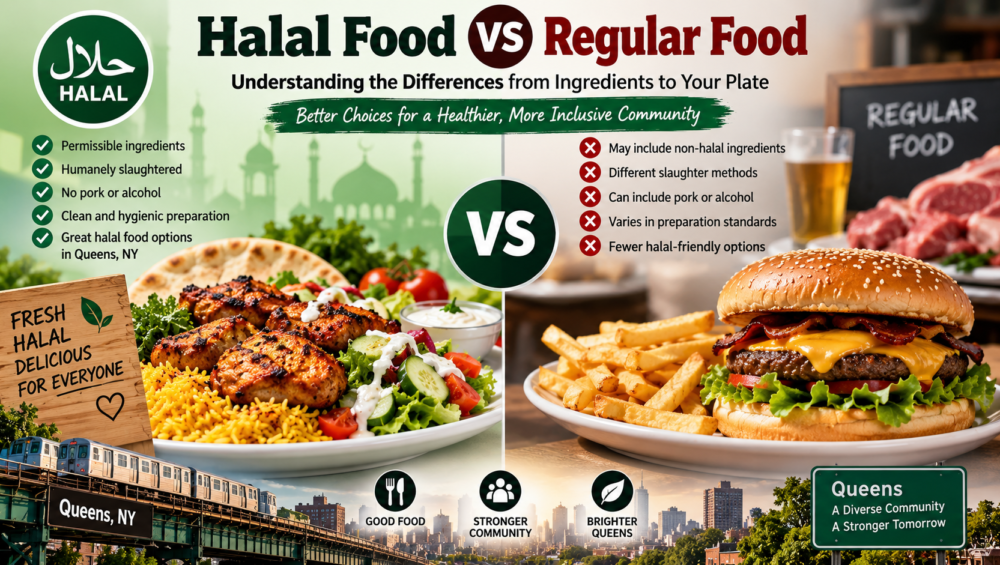
Halal food vs regular food comparison showing differences in ingredients, meat preparation, and food choices in Queens, NY.

Halal Food vs Regular Food: What Is the Difference?

Halal food vs regular food is often discussed as if the two categories describe completely different cuisines. They do not.

Halal is a religious dietary classification. “Regular food” is not an official food-safety, religious, or culinary standard. In everyday conversation, people usually use the term to mean food that has not specifically been prepared, sourced, or represented according to halal requirements.

The difference can involve ingredients, meat sourcing, slaughter requirements, alcohol, pork, animal-derived ingredients, and food handling. However, the finished meals may look and taste very similar.

A halal cheeseburger can look like another cheeseburger. Halal grilled chicken can use the same vegetables, bread, rice, spices, and cooking techniques as another grilled chicken meal.

The distinction comes from whether the ingredients and applicable processes meet Islamic dietary rules.

USDA guidance says halal diets typically exclude pork, alcohol, alcohol-containing products, and certain non-halal animal-derived ingredients. For meat and poultry sold with halal labeling at federally inspected plants, USDA states that the products must be handled according to Islamic law and under Islamic authority.

For Queens diners, knowing these differences helps you order confidently without assuming halal food has to be unfamiliar.

What Is Halal Food vs Regular Food and Why Does It Matter in Queens?

The most important fact about halal food vs regular food is that “regular” does not automatically mean bad, unsafe, or unhealthy. It simply does not communicate the specific religious standard that the word halal communicates.

Similarly, halal does not automatically mean organic, low-calorie, preservative-free, gluten-free, or healthier. Those are separate classifications.

A comparison of halal vs non halal food should therefore focus on religious permissibility rather than making unsupported health claims.

In Queens, this distinction matters because the borough has a highly diverse restaurant culture. Diners can encounter similar dishes prepared by restaurants following different dietary standards.

One restaurant may use halal chicken. Another may use chicken without a halal designation. Both can cook that chicken over rice, grill it, add vegetables, and serve it with sauce.

New York adds another layer of consumer transparency. Businesses representing food as halal are subject to state registration and disclosure requirements, and establishments preparing halal food on-site must display certification information. Registration itself is not equivalent to halal certification.

Zaki’s Halal Food openly positions itself as a halal restaurant in South Richmond Hill, Queens. Its restaurant homepage lists chicken, lamb, falafel, kebabs, burgers, and other dishes as part of its halal menu.

Halal Food vs Regular Food: Key Differences at a Glance

Halal food vs regular food becomes clearer when you compare specific areas rather than making a general judgment about one being “better.”

Meat is one important area, but ingredients such as pork derivatives, alcohol, and animal-based additives can also matter.

Comparison AreaHalal FoodFood Not Verified as Halal
PorkProhibitedMay be used
AlcoholProhibited for halal dietsMay be included
Meat sourcingMust meet applicable halal requirementsNo halal requirement
Slaughter requirementsGoverned by Islamic requirementsDepends on producer
Animal-derived additivesNeed suitable sourcesNo halal-specific restriction
CuisineCan be any cuisineCan be any cuisine
NutritionDepends on the dishDepends on the dish
Food safetyMust follow normal food-safety rulesMust follow normal food-safety rules

The phrase halal meat vs regular meat can create confusion because “regular meat” is not a formal category. A more precise comparison is halal-certified or halal-represented meat versus meat that is not represented as halal.

USDA says federally inspected meat and poultry using halal labeling must be handled according to Islamic law and under Islamic authority.

The nutritional value, meanwhile, depends on the cut of meat, serving size, cooking method, sauce, salt, fat, and the rest of the meal.

That distinction helps diners make informed decisions instead of assuming that religious classification automatically determines nutritional quality.

Tips for Comparing Halal Food vs Regular Food Before Ordering

When comparing halal food vs regular food, focus on the information that actually changes your dining decision. A few focused questions are more useful than broad assumptions about quality or taste.

If halal compliance matters to you, verify the details relevant to your level of observance.

  • Look for a clear halal statement from the restaurant.
  • Ask whether all meat or only specific products are halal.
  • Check the certifier when certification matters to you.
  • Ask about sauces, marinades, gelatin, and animal-derived ingredients.
  • Do not treat halal as a synonym for healthy or organic.
  • Ask allergy questions separately.
  • Compare the actual dish, ingredients, portion, and price.

The difference between halal and haram food is fundamentally about what is permitted and prohibited under Islamic rules, not about whether one dish looks more Middle Eastern than another.

That is why a halal burger can meet the standard while a seemingly traditional dish may not, depending on its ingredients.

Zaki’s gives diners access to menu details through its full halal restaurant menu, where rice platters, gyros, pita platters, kebabs, burgers, and sides are listed with current prices.

Infographic Image

Title: “Halal Food vs Regular Food: 7 Key Differences”

Suggested panels: Ingredients, pork, alcohol, meat sourcing, preparation, cuisine, nutrition.

Alt text: “Halal food vs regular food comparison guide for diners in Queens NY”

Does Halal Food vs Regular Food Taste Different?

One of the biggest misconceptions about halal food vs regular food is that halal status creates one particular taste.

It does not.

Halal requirements determine whether ingredients and applicable preparation are permissible. Flavor comes from the recipe.

A cook can season halal chicken with cumin, garlic, pepper, herbs, chili, lemon, or dozens of other ingredients. Another cook can prepare a milder version. The religious classification does not create a mandatory flavor profile.

This explains why halal restaurants can offer different culinary traditions. You might find biryani beside New York-style chicken over rice, burgers beside falafel, or kebabs beside chicken sandwiches.

At Zaki’s, the current menu includes Chicken Tikka Masala with Rice, Chicken Over Rice, Lamb Over Rice, Chicken Gyro, Chicken Kabab, falafel dishes, burgers, and other options.

The cooking method also matters. Grilling produces a different flavor from frying. Sauces can change heat and richness. Rice seasoning can make one platter taste completely different from another.

For a first-time diner, this means you should choose according to your taste rather than assuming halal food will taste a particular way.

You can browse Zaki’s halal food online to compare different meal types before visiting.

Halal Food vs Regular Food: Ingredients and Preparation Table

Halal food vs regular food comparisons become especially useful when diners look at individual ingredients. Many basic ingredients are identical in both kinds of meals.

The difference appears when an ingredient comes from a prohibited source or when meat needs halal verification.

Ingredient or ProcessHalal ConsiderationPractical Example
RiceGenerally permittedCheck broth or added fat
VegetablesGenerally permittedCheck sauces
ChickenRequires suitable halal sourceChicken platter
BeefRequires suitable halal sourceBurger or kofta
PorkProhibitedBacon, ham, lard
AlcoholProhibitedWine-based sauce
GelatinSource mattersDesserts or processed food
Cheese enzymesSource may matterProcessed cheese products

The USDA specifically identifies pork, alcohol, and some animal-derived ingredients as concerns for people following halal diets.

The practical halal food requirements can therefore reach beyond the main protein. Seasonings, flavorings, sauces, and processed components may also need consideration.

This is also why diners should avoid assuming vegetarian automatically means halal. Vegetarian removes meat, but it does not necessarily remove alcohol or every animal-derived processing aid.

The better approach is to consider the entire dish.

Why Choose Zaki’s for Halal Food vs Regular Food in Queens?

Zaki’s gives Queens diners a straightforward example of how halal standards can be applied to familiar restaurant food.

The restaurant describes itself as family-owned and focused on fresh, high-quality halal meals. Its stated goal is to serve halal food with friendly service in a clean and welcoming environment.

Diners do not have to choose an unfamiliar dish simply because they want halal food. Zaki’s offers rice plates, gyros, kebabs, burgers, chicken sandwiches, falafel, and other recognizable meals.

This is useful for groups where some diners know halal food well and others are trying it for the first time.

The menu also lets customers compare options and prices before ordering. For anyone researching the restaurant itself, the About Zaki’s Halal Food page explains its South Richmond Hill positioning and menu focus.

Halal Food vs Regular Food for Everyday Diners

Image Recommendation: Split-screen photograph showing two similar chicken-and-rice meals with labels focused on sourcing and ingredients rather than appearance.

Alt text: “Halal food vs regular food explained through ingredient and sourcing differences”

The key lesson in halal food vs regular food is that appearance rarely gives you the full answer.

A meal can look exactly like another meal while using different meat sources or ingredients.

This is important for Muslims who follow halal requirements, but the information can also help non-Muslim diners understand what a halal restaurant is communicating.

A halal designation does not mean the food is only for Muslim customers. It tells you something about how the food is sourced and prepared according to a religious dietary framework.

It also does not tell you whether the meal is low-fat, low-sodium, gluten-free, dairy-free, or allergen-free. Those questions still need their own information.

For first-time diners in Queens, the easiest strategy is to choose a meal you already understand and then learn about its halal preparation.

A burger, gyro, grilled chicken platter, or falafel dish can provide an easy introduction.

For additional food guides and local dining information, visit the Zaki’s blog.

Frequently Asked Questions About Halal Food vs Regular Food

Halal food vs regular food questions often focus on price, preparation, taste, certification, and whether halal changes the basic dining experience. The short answers below address those practical concerns.

1. What is the biggest difference between halal food vs regular food?

The main difference is compliance with Islamic dietary requirements. Halal food excludes prohibited ingredients and, when meat is involved, requires meat to meet relevant halal standards.

2. Does halal meat taste different?

Not necessarily. Flavor depends heavily on the cut, freshness, seasoning, cooking method, sauce, and recipe.

Two dishes prepared differently can taste very different even when both use halal meat.

3. Is halal food automatically healthier?

No. Halal is a religious dietary classification, not a nutrition score.

Calories, fat, sodium, protein, fiber, and other nutritional factors depend on the actual ingredients and preparation.

4. Does halal food cost more?

There is no universal halal price premium for restaurant meals. Price depends on ingredients, portions, supplier costs, and restaurant pricing.

Zaki’s current online menu lists multiple affordable meal categories, but prices should always be checked before ordering because they can change.

5. How long does halal food take to prepare?

Halal status does not determine restaurant cooking time. A gyro may be prepared faster than a grilled dish, while a large order may take longer than a single meal.

6. How is halal meat identified?

Diners can look for restaurant statements, certification information, supplier information, or product labels. For federally inspected meat and poultry, USDA explains the requirements attached to halal or Zabiah Halal labeling. See the USDA meat and poultry labeling guide.

7. Where can I compare halal meal options in Queens?

Zaki’s Halal Food serves South Richmond Hill and lists its current options online. If you have questions about ingredients, pickup, or menu choices, contact Zaki’s Halal Food. 

how do you get zaki's halal food?

How to Get to Zaki’s Halal Food?

Zaki’s Halal Food is conveniently located on 101st Avenue near 108th Street in South Richmond Hill, Queens, making it easy to reach from nearby Richmond Hill, Ozone Park, Jamaica, and other parts of Queens. Visitors traveling by bus can take the Q8, which runs along 101st Avenue and stops at 101st Ave and 108th Street, just steps from the restaurant. For subway riders, the A train provides convenient access to the surrounding area, with stations along nearby Liberty Avenue. The restaurant is also close to the busy Liberty Avenue corridor, a well-known commercial area serving the diverse South Richmond Hill and Richmond Hill communities. With access to 101st Avenue, Liberty Avenue, local bus service, and the A subway line, Zaki’s Halal Food is conveniently positioned for customers looking for halal food in South Richmond Hill and nearby Queens neighborhoods.

Contact Information

Phone: +1 718-285-5191

Address:
Zaki’s Halal Food
108-15 101st Ave
South Richmond Hill, NY 11419
United States

Email:
info@zakishalalfoodusa.com
orders@zakishalalfoodusa.com


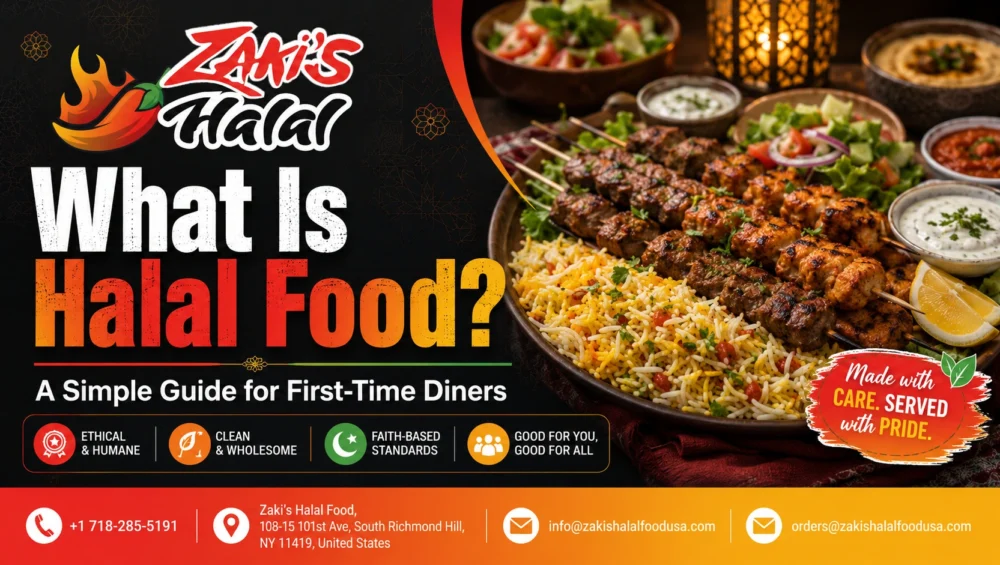
Simple guide explaining what halal food is for first-time diners in Queens NY”

What Is Halal Food? A Simple Guide for First-Time Diners

People often ask What is halal food? Halal food is food that Muslims are permitted to eat under Islamic dietary rules. The word “halal” means permissible or lawful, and the rules can apply to ingredients, meat, drinks, food preparation, and how certain products are handled. 

To explain it simply, halal food means that the money used to buy the ingredients has been earned through lawful and honest means, without fraud or scams. The ingredients should be fresh, and the animal from which the meat comes should be properly cleaned and handled. Most importantly, the animal must be slaughtered according to Islamic guidelines, with the name of God (Allah) mentioned at the time of slaughter. 

For a first-time diner, halal food does not need to feel complicated. Many foods you already know, including rice, vegetables, bread, chicken, beef, lamb, fish, burgers, wraps, and grilled dishes, can be halal when their ingredients and preparation meet the appropriate requirements.

The most important distinction is that halal is not a specific cuisine. It is a dietary standard. A Middle Eastern meal can be halal, but an American-style burger, South Asian rice dish, or another cuisine can also meet halal requirements.

The USDA explains that halal diets typically exclude pork, alcohol, products containing alcohol, and certain non-halal animal-derived ingredients. It also notes that certified halal foods are processed in ways intended to maintain the integrity of their halal status.

For diners in South Richmond Hill and Queens, understanding these basics makes choosing a meal much easier. Zaki’s Halal Food serves halal-focused meals including chicken over rice, lamb dishes, gyros, kebabs, falafel, burgers, and other familiar choices. The restaurant identifies itself as a family-owned halal restaurant serving the Queens community.

What Is Halal Food and Why Does It Matter in Queens, NY?

What is halal food in practical terms? It is food made with permitted ingredients while following Islamic dietary requirements relevant to the particular food being prepared.

The halal food meaning goes beyond simply avoiding pork. Certain ingredients derived from animals may require verification, alcohol is generally excluded, and meat requires specific consideration. USDA guidance also states that meat and poultry products labeled Halal or Zabiah Halal at federally inspected plants must be handled according to Islamic law and under Islamic authority.

This matters in Queens because diners have access to food from many cultures. You may find Middle Eastern, South Asian, American, Mediterranean, Caribbean, and fusion dishes within a relatively small area. The cuisine name alone cannot tell you whether every ingredient meets halal requirements.

New York also regulates businesses that represent food as halal. Businesses making or selling halal food must register with the New York State Department of Agriculture and Markets, and establishments preparing halal food on-site must provide specified certification information. Importantly, government registration itself is not the same thing as halal certification.

That distinction is useful for first-time diners. Instead of judging a restaurant by its appearance or cuisine, look for clear information and ask questions when a particular certification standard matters to you.

At Zaki’s, you can explore the current halal menu before visiting the South Richmond Hill location. The current menu includes rice platters, gyros, pita platters, kebabs, burgers, sides, biryani, and seafood.

What Is Halal Food? Foods First-Time Diners Should Understand

What is halal food becomes easier to understand when you separate foods into simple categories. Some foods are naturally straightforward, while meat, processed products, sauces, and ingredients derived from animals often require more attention.

A common question is what does halal mean when you see it beside a menu item. It indicates that the food is being represented as permissible according to Islamic dietary rules. It does not mean that the food belongs to one particular country or cooking style.

Food TypeGeneral ConsiderationWhat to Check
Fruits and vegetablesUsually straightforwardAdded sauces or alcohol-based flavorings
Rice and grainsUsually straightforwardBroths, fats, seasonings, or additives
Chicken, beef, and lambRequires halal sourcingMeat source and halal status
Fish and seafoodCommonly acceptedPreparation and added ingredients
Processed foodsRequires checkingGelatin, enzymes, fats, flavorings
Vegetarian dishesMay be suitableAlcohol or non-halal animal derivatives

The USDA specifically notes that ingredients such as animal-derived rennet can affect whether a product works for halal-observant consumers.

What is halal food therefore cannot always be answered by looking at the finished plate. Two chicken dishes can look identical while using meat sourced under completely different standards.

The same applies to sauces and processed ingredients. A dish that appears simple may contain ingredients that matter to someone following Islamic dietary rules.

This is why restaurant transparency is useful. A first-time diner does not need to understand every food-production detail, but knowing where to find trustworthy information makes ordering easier.

First-Time Tips for Choosing What Is Halal Food in Queens

It’s much easier to navigate when you know which questions matter. You do not need to question every ingredient in every meal, especially when a restaurant clearly communicates its halal practices.

The key is to separate important verification from assumptions. If you follow a particular certification or religious interpretation, ask the restaurant directly rather than assuming every halal establishment follows exactly the same standard.

  • Check whether the restaurant clearly identifies its food as halal.
  • Ask whether all meat is halal or only selected menu items.
  • Ask about the certifier or supplier when that information matters to you.
  • Check sauces, marinades, gelatin, and processed ingredients when necessary.
  • Keep allergy questions separate from halal questions.
  • Do not assume vegetarian automatically answers every halal concern.
  • Read the menu before ordering so you can ask focused questions.

For diners specifically wondering about halal meat, USDA labeling guidance gives a useful baseline for federally inspected meat and poultry carrying halal labeling. Such products must be handled according to Islamic law and under Islamic authority.

Zaki’s states that it serves meals using halal ingredients and lists items such as Chicken Over Rice, Lamb Over Rice, Mixed Over Rice, gyros, kebabs, and burgers. You can learn more about the restaurant through the Zaki’s Halal Food About page.

How Is Halal Food Different From a Cuisine or Diet Trend?

Halal food NYC is sometimes misunderstood because halal dishes are often associated with particular cuisines. In New York, many diners first encounter halal food through chicken-and-rice platters, gyros, kebabs, falafel, biryani, or Mediterranean-style meals.

Those dishes can be halal, but halal is not defined by spices, rice, pita, grilling methods, or geographic origin. It is defined by whether the ingredients and applicable preparation meet Islamic dietary requirements.

A halal diet can therefore include foods from many culinary traditions. Someone can prepare halal tacos, burgers, pasta, curry, grilled chicken, sandwiches, rice bowls, or traditional Middle Eastern dishes.

This also means halal does not automatically equal vegetarian, vegan, organic, gluten-free, low-fat, or low-calorie. These labels answer different questions.

For example, halal chicken may still contain gluten in a breading. A halal burger can still be high in calories. A vegan recipe can still contain an alcohol-based ingredient. Someone with a food allergy still needs normal allergen information even if the restaurant serves halal food.

This distinction creates a better first dining experience. Instead of asking whether halal food will taste unfamiliar, think of halal as a standard that can be applied to many foods you already enjoy.

Zaki’s demonstrates this range through familiar options such as rice platters, gyros, burgers, chicken sandwiches, falafel, kebabs, and biryani.

What Is Halal Food at a Restaurant? Quick Comparison Table

What is halal food when you are actually reading a restaurant menu? The easiest approach is to look beyond the dish name and consider its ingredients, meat source, sauces, and preparation.

A chicken sandwich, for example, is not automatically halal or non-halal based on appearance. The meat and other relevant ingredients determine whether it meets the required standard.

Menu ExampleCan It Be Halal?Main Question
Chicken over riceYesIs the chicken halal?
Beef burgerYesIs the beef halal?
FalafelYesAre sauces and ingredients suitable?
Lamb gyroYesIs the lamb halal?
Vegetable riceYesWhat broth, fat, or sauce is used?
DessertDependsDoes it contain alcohol or animal gelatin?
Cheese dishDependsWhat type of animal-derived ingredients are used?

This table also shows why looking only for pork is not enough. Pork is an important prohibited category, but other ingredients may need consideration as well.

For a clear official overview, the USDA guide to halal foods explains common dietary restrictions and halal-certified foods.

At Zaki’s, diners can browse halal food available for ordering before deciding what they want. The online shop currently lists dozens of menu products across multiple categories.

Why Choose Zaki’s When Learning What Is Halal Food in Queens?

For someone asking what is halal food, experiencing a real meal can make the concept much easier to understand than reading definitions alone. A good first experience should combine clear menu choices, familiar flavors, and a restaurant that openly identifies its halal positioning.

Zaki’s Halal Food is located at 108-15 101st Ave in South Richmond Hill, Queens. Its website describes the restaurant as family-owned and focused on fresh halal meals prepared with premium ingredients.

A first-time diner can start with Chicken Over Rice, try a lamb gyro, choose falafel for a meat-free meal, or explore kebabs and pita platters. The menu also gives diners several price points rather than requiring a formal sit-down experience.

The restaurant says online ordering and pickup are available. This can be convenient for Queens customers who want to look through the menu before visiting.

You can also read the Zaki’s halal food blog resources if you want to learn more about dishes, halal dining, and local food options.

What Is Halal Food for First-Time Diners? What to Expect

Image Recommendation: A natural photo of a halal chicken-and-rice platter with salad and sauces, photographed at table level.

Suggested alt text: “Halal chicken over rice meal for a first-time diner in Queens NY”

What is halal food when you finally sit down to eat it? In most cases, the experience feels much more familiar than first-time diners expect.

Halal does not have one required flavor profile. The food may be mild, spicy, grilled, crispy, savory, creamy, or fresh depending on the recipe.

At Zaki’s, Chicken Over Rice combines seasoned chicken, basmati rice, salad, and signature sauce. Lamb Over Rice uses lamb with seasoned rice, salad, and sauces, while gyro wraps place chicken, lamb, mixed meat, or falafel inside pita.

Those are recognizable meal formats even for someone who has never intentionally ordered halal food before.

If you are uncertain about spice, sauces, meat choices, or ingredients, ask before ordering. A first visit is also a good time to start with a straightforward dish and explore more of the menu later.

Halal dining is open to people from any background. You do not need special dining knowledge, clothing, or a particular cultural background to order a halal meal.

The goal is simply to understand what the label means and choose food that suits your taste and dietary needs.

Frequently Asked Questions About What Is Halal Food

What is halal food is a definition question, but diners usually have practical questions immediately afterward. These answers cover cost, preparation, requirements, restaurant verification, and local New York considerations.

1. What is halal food in one simple sentence?

Halal food is food that is permissible under Islamic dietary rules, including requirements concerning ingredients and, where applicable, meat sourcing and preparation. USDA guidance identifies pork, alcohol, and certain non-halal animal-derived ingredients as common exclusions.

2. Is halal food more expensive?

Not necessarily. Price depends on the restaurant, ingredients, portion size, and dish.

As of August 2026, Zaki’s online menu lists Chicken Over Rice at $8.99, Chicken Gyro at $6.99, and several other meals at different price points. Prices can change, so customers should check the current Zaki’s menu before ordering.

3. How long does halal food take to prepare?

Halal does not determine cooking time. Preparation time depends on the recipe, restaurant workload, order size, and whether the meal is cooked to order.

Zaki’s promotes online ordering and pickup, but customers who need a specific pickup time should confirm directly with the restaurant.

4. Does halal food always mean no pork?

Pork and pork products are generally prohibited in halal diets, but halal requirements involve more than avoiding pork. Alcohol and certain animal-derived ingredients can also be relevant.

5. Does a restaurant need halal certification in New York?

New York requires businesses representing food as halal to comply with specific registration and disclosure rules. On-site halal sellers must post certification information visible to consumers, while state registration itself does not mean the government has certified the food as halal.

6. Can I ask a restaurant where its halal meat comes from?

Yes. If meat sourcing or a particular certification standard matters to you, asking the restaurant is a reasonable way to make an informed choice.

7. Where can I try halal food in South Richmond Hill?

Zaki’s Halal Food is located at 108-15 101st Ave, South Richmond Hill, NY 11419. The website lists chicken and lamb rice platters, gyros, falafel, kebabs, burgers, and other options.

For menu or ingredient questions, contact Zaki’s Halal Food.

Contact Information

Phone: +1 718-285-5191

Address:
Zaki’s Halal Food
108-15 101st Ave
South Richmond Hill, NY 11419
United States

How to Get to Zaki’s Halal Food

📍 Address:
108-15 101st Ave, South Richmond Hill, NY 11419, United States

🚌 By Bus:
The Q8 bus is one of the easiest ways to reach Zaki’s Halal Food. The Q8 travels along 101st Avenue and stops at 101 Ave / 108 St, just steps from the restaurant. The Q8 connects the area with Jamaica and other parts of Queens and Brooklyn.

🚇 By Subway:
Visitors traveling by subway can connect to local bus service to reach the restaurant. One practical option is to travel through the Jamaica/Sutphin Boulevard area and transfer to the Q8 bus, which travels along 101st Avenue toward the restaurant. MTA information confirms the Q8 serves Sutphin Blvd/Archer Ave and continues along 101st Avenue.

🚶 Nearby Landmark:
Zaki’s Halal Food is located on 101st Avenue near 108th Street in South Richmond Hill, Queens, making it convenient for customers from South Richmond Hill, Richmond Hill, Ozone Park, Jamaica, and surrounding Queens neighborhoods.